


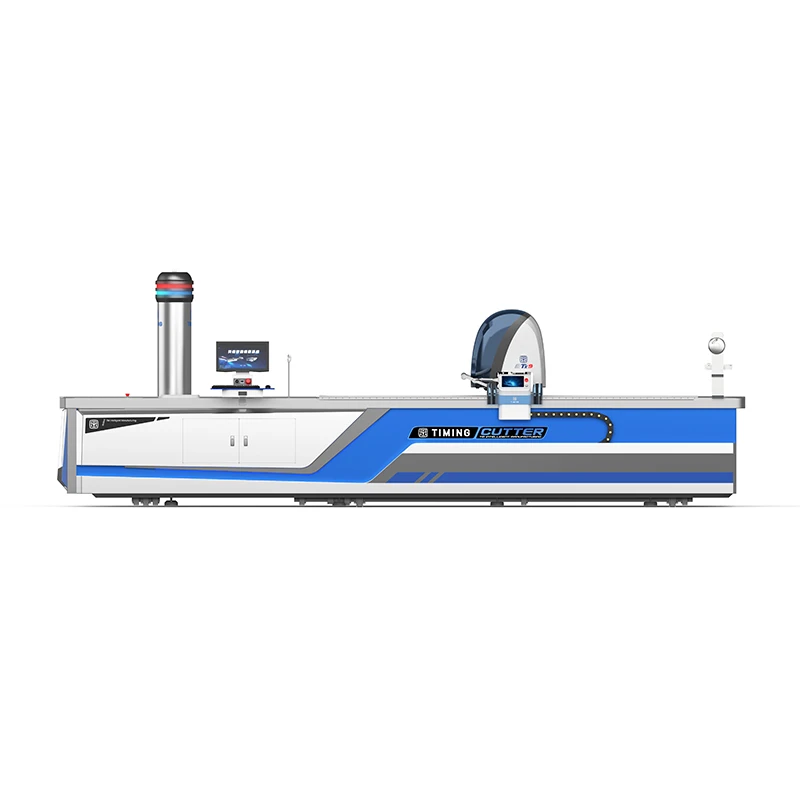
Automotive Textile Cutting Machine
The CNC Automotive Textile Cutting Machine is engineered for Tier-1 and Tier-2 automotive interior suppliers, seat cover manufacturers, and commercial vehicle upholstery plants requiring high repeatability, low material scrap, and continuous multi-shift production.
Driven by closed-loop servo motors, inverter-controlled multi-zone vacuum clamping, and high-frequency oscillating knife toolheads, this system processes technical textiles, synthetic leathers, natural hides, and acoustic foam laminates without dimensional distortion or edge fraying.
Primary Material Compatibility
Automotive Seat Covers: Woven fabrics, knitted textiles, double-raschel mesh, dynamic stretch fabrics.
Leathers & Synthetics: Genuine cowhide, PVC, PU leather, microfiber leather, perforated synthetic skins.
Cabin & Interior Trims: Door panel skins, sun visor covers, headliner fabrics, pillar wraps, armrests.
Flooring & Trunk Liners: Tufted carpets, rubberized floor mats, trunk isolation pads, heavy EVA liners.
Cushioning & Insulation: Polyurethane foam laminates, acoustic felt, thermal insulation layers, PE foam.
Key Features
Closed-Loop Motion Control & Thermally Treated Frame
Precision Standard: ±0.1 mm accuracy on single-layer fabrics; ±0.3 mm on compressed multi-layer textiles (up to 30 mm compressed).
Heavy-duty steel machine frame undergoes thermal stress-relief annealing to prevent long-term bed distortion during continuous high-speed operation.
Dual-drive gantry structure powered by high-torque Panasonic/Yaskawa AC servo motors paired with planetary gearboxes and precision linear guide rails.
Multi-Tool Quick-Change Cutting Platform
Configured with modular toolheads to process different textile densities on a single machine:
• High-Frequency Oscillating Knife (EOT): Designed for genuine leather, dense PU, and multi-layer synthetic hides.
• Driven Rotary Knife (DRT): Engineered for high-speed cutting of single-layer or multi-layer woven fabrics and headliners at speeds up to 1200 mm/s.
• Drag Knife / Creasing Wheel: For thin plastic patterns, film covers, and lining materials.
• Heavy-Duty Pneumatic Knife: Cuts through high-density acoustic felt, trunk carpeting, and foam laminates up to 50 mm thick (compressed).
Inverter-Controlled Multi-Zone Vacuum Table
Dynamic zone selection concentrates air suction exclusively in the active cutting envelope, reducing electrical power consumption by up to 30% compared to fixed vacuum systems.
High-friction permeable conveyor felt transports cut components automatically to the collection table for continuous workflow.
Automated CAD/CAM Integration & Nesting Efficiency
Direct import for DXF, PLT, HPGL, and ISO G-code formats from standard automotive design platforms including Lectra, Gerber, Optitex, and AutoCAD.
Automated dynamic nesting algorithms optimize piece spacing, edge clearance, and grain direction to maximize square-meter textile utilization.
Technical Specifications
|
Parameter |
Technical Standard / Configuration |
|
Machine Series |
CNC Automotive Textile Cutting Machine Series |
|
Effective Working Area |
1600 mm x 2500 mm / 2100 mm x 3000 mm (Custom lengths available) |
|
Positioning Repeatability |
±0.05 mm |
|
Cut Accuracy Standard |
Single-Layer Textile: ±0.1 mm / Multi-Layer (<=30mm compressed): ±0.3 mm |
|
Maximum Cutting Speed |
100 mm/s – 1200 mm/s (Variable based on contour radius and material hardness) |
|
Maximum Cutting Thickness |
Up to 50 mm (Compressed thickness subject to material density) |
|
Drive System |
AC Servo Motor System with Closed-Loop Encoder Feedback |
|
Transmission Type |
Helical Rack-and-Pinion + Precision Linear Guide Rails |
|
Vacuum System |
Side-channel dynamic inverter vacuum pump (7.5 kW – 15 kW optional) |
|
Pneumatic Air Requirement |
0.6 – 0.8 MPa (Clean, dry compressed air required for pneumatic toolhead) |
|
Operating Voltage |
3-Phase 380V/220V ±10%, 50/60Hz |
|
Software Capabilities |
Dynamic Nesting Engine, Tool Path Optimizer, File Converter |
|
Compliance Standards |
CE Certified, ISO 9001 Production Quality System |
Industrial Applications
Automotive Seat Manufacturing
Cut panels for seat covers, lumbar support padding, headrest covers, and side bolster wraps.
Vehicle Interior Trims
Leather trimming for door armrests, dashboard covers, steering wheel covers, and A/B/C pillar wraps.
Commercial Vehicle Flooring
Heavy carpets, trunk cargo mats, sound-deadening floor underlays, and EVA floor liners.
Specialty Vehicle Interiors
Modular RV seat cushions, marine interior upholstery, and commercial fleet seating.
Factory Quality Assurance & Global Service
Testing Protocols Before Dispatch
Every machine passes dynamic calibration prior to shipment:
• Laser Interferometer Alignment: Verification of X/Y axis motion linear accuracy across the full working surface.
• 72-Hour Continuous Load Testing: Stress testing of servo drivers, vacuum solenoids, and oscillating knife toolheads under maximum speed cycles.
• Material Cutting Verification: Sample test cuts performed using customer-supplied fabrics or leathers with dimensional inspection reports attached.
Spare Parts & Technical Support
• Wear Component Stock: Standardized tungsten carbide blades, conveyor felts, and grinding stones shipped globally within 24–48 hours.
• Remote & On-Site Setup: Remote software installation, CAD file mapping assistance, and video training modules for operator onboarding.
• OEM Customization: Tailored working bed dimensions, custom color branding, regional voltage adaptation, and localized software interfaces for international distributors.
FAQ
Q: How does cut precision differ between single-layer fabrics and thick multi-layer materials?
A: On single-layer textiles and synthetic leathers, the machine maintains ±0.1 mm dimensional accuracy. When cutting thick multi-layer stacks or compressed foam laminates (up to 30 mm – 50 mm), minor compression occurs under blade pressure, resulting in a production accuracy of ±0.3 mm, which fully complies with Tier-1 automotive sewing specifications.
Q: What toolhead is recommended for cutting natural leather seat covers?
A: For genuine leather, a high-frequency electric oscillating knife (EOT) is recommended. Unlike laser cutting machines, mechanical oscillating blades generate zero heat, eliminating edge hardening, carbonization, foul odors, or edge discoloration on premium leather.
Q: What utility connections are required in the factory prior to installation?
A: The system requires a 3-phase electrical supply (380V or 220V depending on local standards) and an industrial compressed air supply delivering 0.6 to 0.8 MPa clean, dry air for pneumatic toolhead operation and blade cooling.
Q: Can the control software process DXF files exported from Lectra or Gerber systems?
A: Yes. The control software natively imports vector formats including DXF, PLT, HPGL, and ISO G-code directly exported from Lectra, Gerber, Optitex, and standard CAD software without requiring third-party file converters.
Q: What is the typical service life of cutting blades and conveyor felts?
A: Blade longevity depends on material abrasiveness. High-grade tungsten carbide blades process thousands of meters of synthetic leather before requiring replacement. Permeable conveyor felts feature high self-healing properties and typically provide 12 to 24 months of service under standard multi-shift daily operation.
Hot Tags: automotive textile cutting machine, China automotive textile cutting machine manufacturers, suppliers, Laser Fabric Sample Cutting Machine
You Might Also Like




Send Inquiry