


Automatic Fabric Cutting Machine
TIMING Automatic fabric cutting machines utilize computer-controlled system and various cutting methods to cutting fabric in different shapes, sizes, and patterns with high precision and speed, the machine can handle multiple layers of fabric at once, allowing for efficient batch cutting and optimized material usage. Our automatic fabric/clothes cutting machine widely used in garment industry, upholstery, automotive industry, home textiles, and other applications that involve cutting fabric into specific shapes and patterns, significantly reducing the time and effort required compared to manual cutting machine.
Timing is the leader of automatic fabric/clothes cutting machine manufacture in China, With its automatic fabric cutting machine competitive prices, quality and service, intelligent cutting design,ensures the precision, low cost consumables, easy in maintenance, the company enjoys good reputation among the customers at home and abroad.


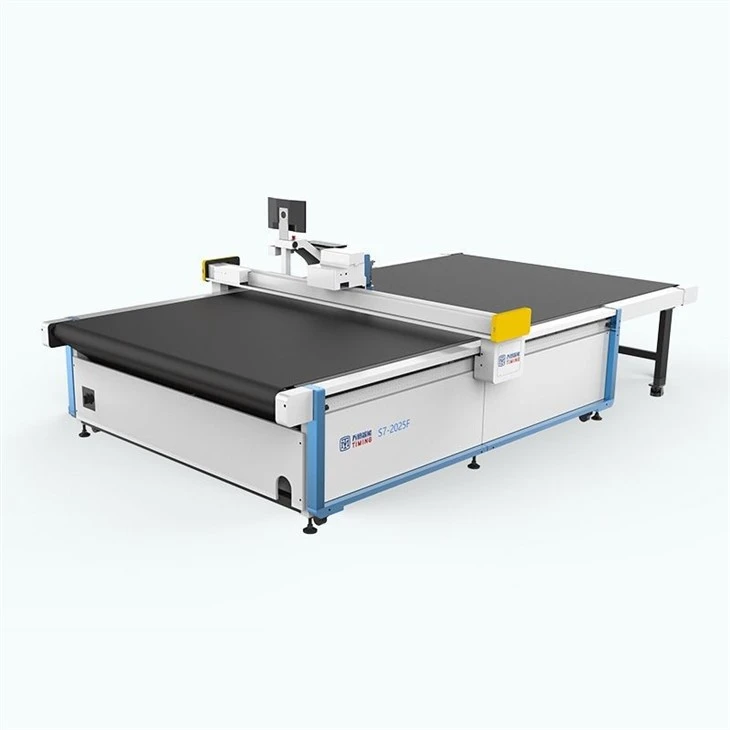
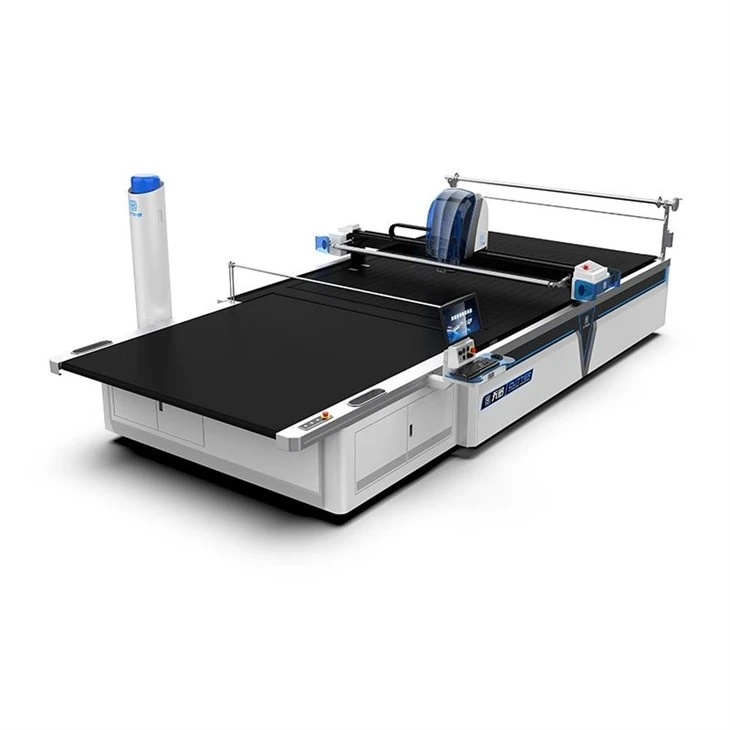
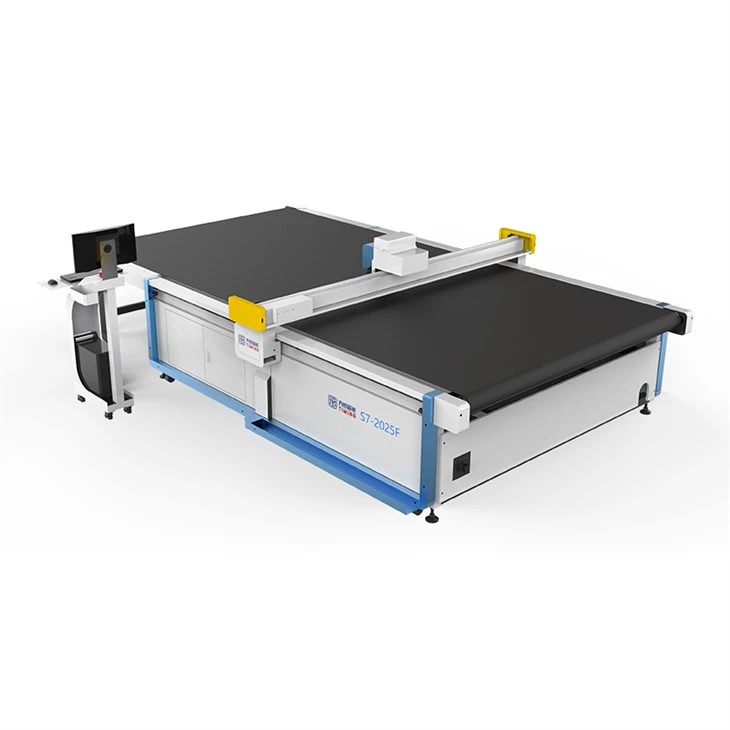
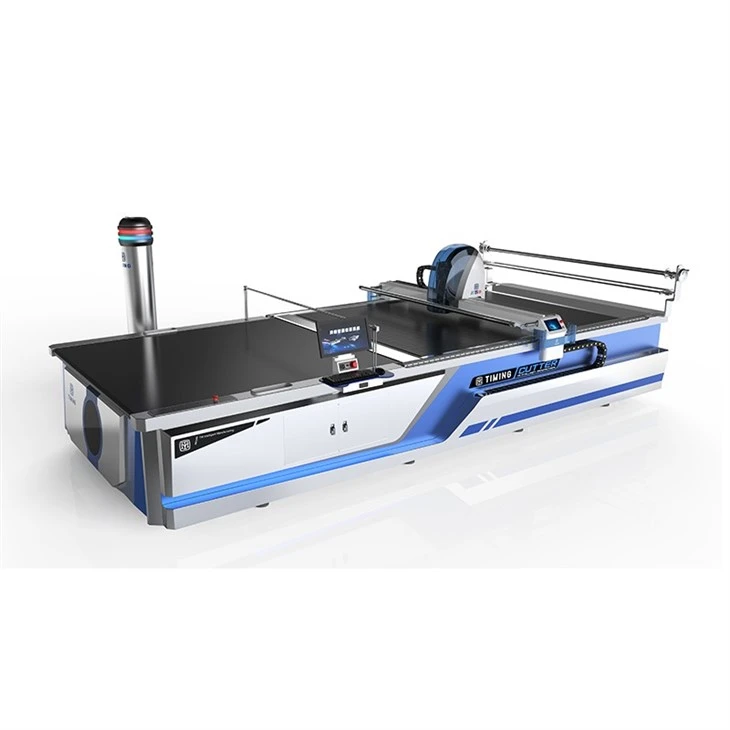

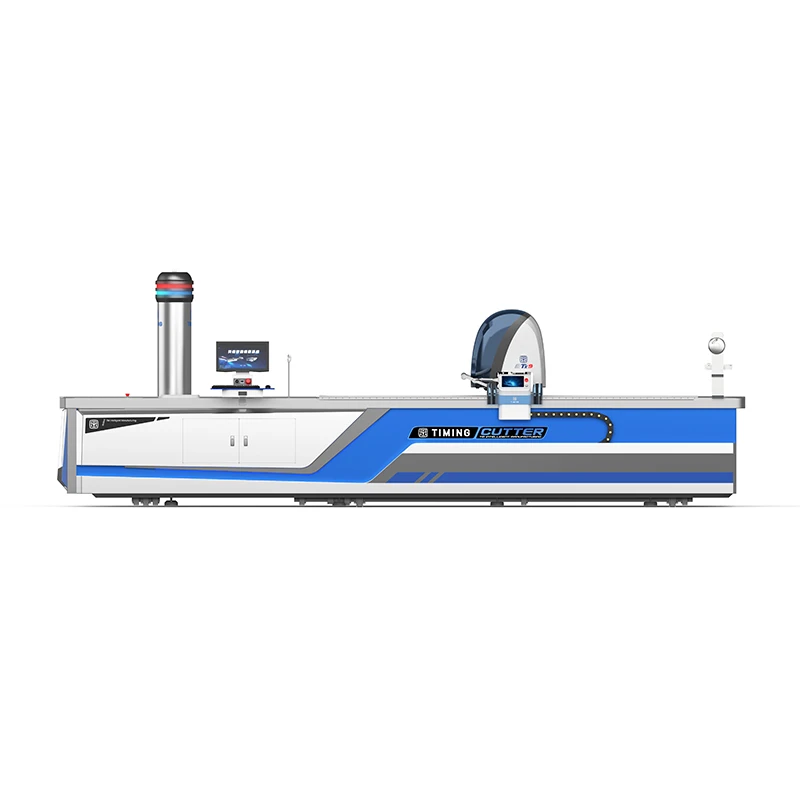

Performance & Efficiency
1. Cutting Speed & Dynamic Performance
All fully automatic CNC cutting machines of TIMING are equipped with a closed-loop full servo drive system, enabling step less variable cutting speed regulation ranging from 0 to 60 m/min. One-click switching is available between high-speed mass production and low-speed precision cutting modes to accommodate differentiated production conditions for all types of fabrics.
The high-speed mode applies to woven fabrics, denim and other conventional thick materials for high-volume standardized orders to maximize cutting throughput. The low-speed mode is specially developed for high-elastic knitted fabrics, lightweight chiffon, coated waterproof fabrics, adopting low-speed flexible cutting to fundamentally avoid fabric stretching, shifting and deformation.
The machine is equipped with servo flexible start-stop control, delivering shock-free startup & shutdown and inertia-free running deviation for stable, low-noise operation. The original on-the-fly cutting intelligent process eliminates downtime for layout connection and realizes continuous coordinated feeding and cutting operations. It overcomes the intermittent working defect of traditional cutting equipment, minimizes non-value-added working hours and improves assembly line turnover efficiency.
2. Cutting Precision & Process Effect
Fitted with a intelligent knife control system plus dynamic real-time knife compensation and deviation correction algorithm, the machine ensures stable and controllable cutting accuracy across the entire working range. The cutting tolerance for single or multi-layer conventional fabrics is ≤±0.5 mm, featuring excellent consistency between upper and lower layers in stacked cutting with unified specifications for cut piece dimensions, arc radians and positioning holes.
Adopting a vertical self-locking down-cut structure, the tool cuts vertically throughout the process without bevel edges, uneven margins or inter layer misalignment, completely resolving the common issue of offset multi-layer cut pieces. It delivers precise cutting for fine-grain patterns, special-shaped contours, micro holes and arc corners, producing finished cut pieces free of burrs, yarn pulling or filament fraying with no need for secondary manual trimming. The finished product yield rate approaches 100%, significantly reducing manual re-inspection workload.
3. Production Efficiency Improvement
Under traditional manual cutting, a skilled cutting team can only process hundreds of sets of cut pieces within an 8-hour shift, accompanied by pain points including inconsistent cutting precision, high rework rates and substantial fabric edge waste. A single operator can independently run the TIMING automatic cutting machine, which can be seamlessly linked with all TIMING intelligent spreading machines to build an integrated automated production line of automatic spreading & intelligent cutting. Production capacity increases by over 300% within the same working hours, replacing 4 to 6 dedicated cutting operators directly.
The equipment supports vacuum adsorption cutting for multi-layer stacking with a maximum effective cutting thickness of 75 mm, enabling batch processing of dozens of fabric layers in a single pass for high-volume order mass production. It effectively reduces cut piece rework rates and overall fabric loss, lowering auxiliary material and labor costs. Small and medium-sized garment and home textile processing factories can recover equipment investment within an average of 6 to 10 months.
4. Continuous Operation Capability
All cutting machines are designed for high-intensity three-shift industrial operation and support stable full-load non-stop operation for 24 hours. Servo drive modules, PLC main control units and vacuum adsorption modules have passed hundreds of thousands of fatigue condition tests with no step loss, running deviation or precision drift during prolonged full-load operation.
The complete machine adopts an independent split temperature control and heat dissipation module to prevent overheating and unexpected shutdown of core electrical components during continuous operation, fully meeting full-capacity production demands in peak sales seasons. Three protective functions are integrated: fabric end position sensing shutdown, no-material automatic standby and tool head fault self-inspection, which automatically avoid no-load idling and faulty operation, reduce component wear and ensure all-weather stable production of the cutting line.
Application Scope & Compatibility
1. Applicable Fabric Types (Precise Adaptation for All Models)
TIMING cutting machines cover flexible fabrics in the textile, apparel and industrial auxiliary material sectors. Three specialized series are tailored to different materials with clear positioning and exclusive adaptability:
TX/TE/TC General Multi-layer Cutting Series: The mainstream factory production model with strong versatility, compatible with knitted fabrics, woven cotton, spandex elastic fabrics, denim, waterproof coated fabrics, PVC composite materials, non-woven fabrics, brushed home textiles and other conventional materials. It stably processes fabrics ranging from 0.1 mm to 10 mm in thickness.
TMSC Single-layer Precision Cutting Series: Designed for high-precision lightweight fabric cutting, suitable for chiffon, satin, medical gauze and ultra-thin elastic fabrics for seamless underwear. Low-tension flexible cutting prevents fabric yarn pulling, deformation and damage.
Custom Heavy-duty Thick Material Cutting Series: Developed for rigid heavy materials including canvas, oxford cloth, luggage thick fabrics, outdoor tarpaulins and automotive interior materials. The tool head provides sufficient cutting torque to fully penetrate thick layers without residual adhesive filaments between stacked layers.
The equipment is widely applied to full industrial chain production scenarios including garment manufacturing, home textiles, automotive interiors, luggage, shoes & hats, outdoor equipment, plush cultural products and medical textiles.
2. Cutting Width & Stacking Specifications
Three mainstream working widths of 170 cm, 200 cm and 220 cm are standard configurations, compatible with most conventional fabric widths available on the market. Custom widened tables are available upon request for extra-wide fabrics used in home textile and automotive interior production.
The standard maximum stacking cutting thickness is 75 mm. Adsorption force and cutting depth can be adjusted according to fabric bulkiness and elasticity to satisfy single-layer high-precision cutting, multi-layer mass production and thick material penetration cutting. Modular splicing extension of the cutting table allows flexible workshop layout planning to fit both small-batch custom production and high-volume standardized manufacturing.
3. Full Coverage of Cutting Modes
The integrated intelligent cutting system incorporates six production modes: single-layer precision cutting, multi-layer batch cutting, fixed-length sectional cutting, special-shaped contour cutting, micro-hole precision punching and hollow customized cutting.
It supports process technologies including same-direction cutting for double-faced fabrics, pre-relaxation cutting for elastic fabrics and pressurized cutting for thick materials. Users can switch between regular cut piece mass production and special-shaped custom processing with one click, perfectly adapting to the flexible production demands of the garment industry featuring small-batch diversified styles, high-volume standardized orders and personalized customization.
4. Compatibility with Upstream & Downstream Equipment and Software
The equipment is compatible with all TIMING spreading machines and integrated spreading-cutting equipment with own patent software and hardware data, enabling closed-loop automatic spreading and cutting without secondary manual debugging.
The system supports one-click import of layout files from mainstream domestic and international CAD nesting software including Gerber, Lectra, Richpeace, ET and Fulir without format conversion. Parameters such as cutting layers, cutting length and starting coordinates can be synchronized with upstream spreading equipment in one step for seamless cross-process collaboration and shorter parameter commissioning time.
Operation & Intelligence
1. Man-Machine Operation Interface
A 7-inch industrial high-definition touch HMI human-machine interface is equipped with a user-friendly visual operation panel. Operators with zero professional experience can master basic operation within 1 to 2 hours. Six built-in language options (Chinese, English, Spanish, Vietnamese, Bengali and Arabic) support one-click switching for domestic factories and overseas foreign trade production scenarios.
A wireless handheld remote controller enables remote start, pause, emergency stop and process parameter fine-tuning, eliminating frequent trips to the main console and greatly improving operational convenience.
2. Core Automatic Functions
Adopting a fully closed-loop servo automatic control system, the equipment realizes low-labor or unattended intelligent cutting. The fabric adaptive speed regulation algorithm automatically identifies fabric thickness, hardness and elasticity to match the optimal cutting speed; the system automatically reduces speed for high-precision cutting at corners, micro holes and arcs while accelerating for straight cuts to balance precision and efficiency.
An automatic timing knife sharpening mechanism allows customized sharpening frequency and duration to keep the blade consistently sharp for smooth cutting surfaces and extended blade service life. A step-adjustable vacuum adsorption system delivers strong adsorption for thin and fluffy fabrics to prevent displacement and flexible adsorption for heavy materials to avoid surface damage, securing all fabric types during cutting.
3. Parameter Storage & Program Preset
The local storage supports more than 99 sets of exclusive fabric process formulas, where cutting speed, vacuum pressure, sharpening parameters, down-cut depth and cutting modes for various fabrics can be saved. Operators can call preset programs with one click during style changeovers, boosting order switching efficiency by 80%.
Process parameters can be backed up via USB import and export to prevent formula loss caused by incorrect operation , and batch parameter copying is supported to realize standardized unified production across multiple factory machines.
4. Intelligent Expansion Capability
The machine reserves industrial Ethernet and RS485 standard communication interfaces for LAN access, supporting standalone equipment management and cluster centralized control of multiple units. An optional industrial data acquisition module enables real-time statistics of daily cutting length, finished piece output, operating hours, fault frequency and consumable consumption for visualized production data traceability.
The equipment can be seamlessly connected to factory ERP and MES digital management systems to realize full-link digital control covering order release, capacity accounting, work order traceability and equipment operation & maintenance. The factory-standard remote operation & maintenance module allows technical engineers to check operation logs, adjust processes and troubleshoot software & hardware online, resolving most malfunctions without on-site service.
Mechanical Structure & Durability
1. Brand Configuration of Core Components
Main drive servo and tool head servo systems adopt two top-tier industrial brands: Panasonic, featuring abundant torque, high positioning accuracy, fast response and ultra-low failure rates suitable for long-term high-intensity continuous operation.
The main controller is an anti-interference industrial PLC stable against workshop dust, high temperature and voltage fluctuations to ensure uninterrupted program operation. Positioning, deviation correction and pressure detection sensors are all imported from Germany with high detection precision and stable data free of long-term drift error.
The integrated frame is constructed with thick square tubes via integral welding, treated with sandblasting rust prevention and hardening reinforcement to avoid resonance, shaking and deformation during high-speed heavy-load cutting.
2. Overall Durability & Stability
Designed in line with industrial durability standards, the machine has a service life of no less than 10 years under standard working conditions, while core components including servo motors, PLC and transmission parts are rated for 80,000 to 120,000 operating hours.
Five-level electrical and mechanical protection mechanisms are integrated: motor overheat protection, current overload protection, tool head anti-collision protection, fabric jam protection and electric leakage protection, preventing equipment damage and personal safety accidents caused by incorrect operation or overload. As a drafter of national sewing machinery standards, TIMING has conducted hundreds of thousands of fatigue durability tests on all machines, which fully adapt to 24-hour three-shift garment workshop production with stable long-term cutting precision.
3. Maintenance Convenience
Spare parts feature high standardization and versatility. Consumables including cutting blades, sharpening grinding wheels, adsorption filter screens, transmission belts and induction sensors are widely available on the market. The Wuhan headquarters maintains sufficient original spare parts inventory with transparent and accessible procurement.
Standard replacement cycles for consumables: blades every 6–12 months, sharpening wheels every 12 months, filter screens every 3–6 months. Routine maintenance only involves cleaning air ducts and worktables plus lubricating guide rails, requiring less than one hour of monthly maintenance work. The built-in intelligent fault self-diagnosis system displays fault locations, causes and troubleshooting solutions directly on the touch screen, enabling basic maintenance by factory electricians and greatly reducing outsourced maintenance expenses.
4. Energy Consumption & Environmental Performance
Equipped with energy-saving servo drive and variable-frequency vacuum systems, the machine achieves significantly lower energy consumption than conventional old-generation cutters. It automatically enters sleep power-off mode after 5 minutes of standby to eliminate idle energy waste.
The operating noise is ≤75 decibels, complying with industrial workshop environmental noise emission standards, delivering dust-free, eco-friendly cutting operations. One automatic cutting machine replaces multiple manual cutting positions, cutting factory-wide energy consumption by over 50% through reduced lighting, ironing and auxiliary material usage with remarkable energy-saving and cost-reduction effects.
Installation & Space Requirements
1. Floor Area & Space Adaptability
With a compact and streamlined structure, the machine fits most layout designs of domestic garment workshops. Modular spliced extension of the cutting table supports flexible deployment for both small compact workshops and large factory assembly lines.
The overall height adapts to standard 3-meter factory ceilings with no need for building reconstruction, making it ideal for new factory construction and old workshop upgrading projects. It can be directly connected to spreading machines for streamlined production lines to maximize workshop space utilization and reduce idle land resources.
2. Equipment Flexibility & Layout Adaptability
Fixed mounting bases are reserved at the machine bottom for stable floor installation without displacement or vibration during high-speed cutting. The equipment can be flexibly positioned according to production line planning to suit standalone operation and multi-machine parallel mass production layouts. A single cutting machine can be alternately matched with multiple spreading units to improve equipment utilization, avoid redundant equipment procurement and fit modern flexible modular production arrangements.
3. Power & Air Source Compatibility
The wide-voltage design supports domestic single-phase 220V and three-phase 380V power supply. Overseas export models can be customized for 110V voltage to adapt to industrial power grids in Southeast Asia, the Middle East, Europe and the Americas with strong anti-fluctuation performance.
The machine runs normally with only mains power; optional pneumatic cutting assemblies require conventional workshop compressed air of 0.4–0.6 MPa, which can be directly connected to existing factory air pipelines with minimal installation and renovation costs.
Safety & Compliance Certification
1. Comprehensive Safety Protection Configuration
Physical emergency stop buttons are installed on both front and rear sides of the machine, together with a full-range infrared sensing shutdown system to cut off main power instantly in emergencies and avoid safety incidents. The tool working area adopts dual protection of fully enclosed barriers and anti-touch early warning sensors to prevent accidental scratching or entanglement.
Four electrical protection functions (leakage, short circuit, overload and overheat) plus lightning and voltage surge protection safeguard both equipment and operators under complex factory power conditions. Real-time intelligent self-inspection triggers automatic alarm and shutdown in case of fabric jams, tool malfunctions or duct blockages for maximum operational safety.
2. Authoritative Qualifications & Industry Compliance
All TIMING cutting machines hold CE EU safety certification and ISO9001 quality management system certification, meeting global export market access standards. As a national high-tech enterprise, TIMING owns multiple invention and utility model patents for spreading and cutting equipment and participated in drafting the national industrial standard Sewing Machinery Terminology Part 3: Spreading and Cutting Equipment.
The whole-process R&D, production and quality inspection comply with mandatory national standards for sewing machinery. Complete sets of original factory certificates, test reports and qualification filing documents can be provided for factory audits, customs clearance and bidding projects.
Commercial Terms & After-Sales Service
1. Equipment Return on Investment (ROI)
The complete set of delivered equipment includes the main unit, energy-saving vacuum adsorption system, intelligent cutting tool assembly and central control system. One machine replaces 4 to 6 full-time cutting workers. Based on the textile industry average monthly salary of CNY 5,000 per employee, annual direct labor cost savings reach CNY 200,000 to 300,000.
In addition, fabric edge waste is reduced by 3% to 5% with drastically lower cut piece rework costs, faster order delivery and higher production revenue. Small and medium-sized apparel and home textile factories can recover investment within 6–10 months, while large-scale foreign trade manufacturers achieve payback in 5–8 months, delivering long-term remarkable cost-saving and efficiency-enhancing benefits.
2. Delivery Lead Time & Supply Assurance
Headquartered in Wuhan, the company operates a standardized intelligent manufacturing workshop with sufficient spot inventory for standard models, which can be shipped within 7 working days upon order confirmation. Custom widened and heavy-duty tailored machines require a production cycle of 15 to 25 working days. Priority production channels are opened during peak sales seasons with an annual production capacity of over 1,000 units.
Domestic regional agent warehouses and overseas local agent warehouses stock complete machines and core spare parts to guarantee on-time delivery and avoid supply disruptions, meeting customer capacity expansion and incremental production demands.
3. Installation, Commissioning, Training & Technical Support
Domestic Customers: Factory engineers provide free on-site wiring, commissioning and acceptance inspection, together with 2 days of on-site hands-on training covering equipment operation, fabric parameter setting, process editing, daily maintenance and basic troubleshooting to ensure independent operator competency.
Overseas Customers: English & Chinese printed manuals and high-definition tutorial videos are provided alongside one-on-one remote hands-on training; overseas engineer on-site service is available upon request.
A 7×24-hour national 400 service hotline and WeChat remote maintenance channel are available for all equipment to resolve software faults and process adjustments online with all-round after-sales response.
4. Spare Parts Supply System
A two-tier supply system consisting of the central spare parts warehouse at Wuhan headquarters and regional agent warehouses nationwide ensures safety stock of core components and conventional consumables. Spare parts can be delivered to domestic factories within 1–3 working days to minimize production downtime.
Overseas authorized agents maintain local spare parts warehouses to enable local procurement for export customers and avoid production halts caused by long cross-border logistics cycles. Original spare parts are priced transparently with no bundled premiums or hidden charges, and long-term exclusive factory pricing is offered to cooperative clients to lower subsequent operation and maintenance costs.
5. Warranty Policy
The complete machine enjoys an official 1-year warranty, while core electrical components including Panasonic servo motors, industrial PLC and imported sensors are covered under a 2-year exclusive warranty. Within the warranty period, non-human-damaged original spare parts are replaced free of charge with complimentary on-site maintenance with zero hidden fees.
Consumables such as blades, grinding wheels and filter screens are excluded from warranty coverage, though the manufacturer provides lifelong exclusive factory preferential pricing for consumable purchases. After warranty expiry, customers can sign annual exclusive maintenance contracts to enjoy lifelong cost-price spare part procurement and priority dispatching for on-site maintenance. The central control system receives free lifetime firmware upgrades and fabric process optimization iterations to support new fabric materials and innovative production technologies.
why choose us
High quality
Our products are manufactured or executed to very high standards, using the finest materials and manufacturing processes.
Rich experience
Dedicated to strict quality control and attentive customer service, our experienced staff is always available to discuss your requirements and ensure complete customer satisfaction.
Quality control
We have professional personnel to monitor the production process, inspect the products and ensure that the final product meets the required quality level standards, guidelines and specifications.
24h online service
We try and respond to all concerns within 24 hours and our teams are always at your disposal in case of any emergencies.
Certifications


Our Factory
Our company, TIMING, has specialized in the manufacturing of automatic fabric cutters for more than 20 years. Our automatic fabric cutting system mainly consists of five parts: the Timing Automatic Spreading Machine, Timing Automatic Cutting Machine, cutting table, Automatic Labeling Machine, and Automatic Fabric Loader, all of which are controlled by our self-developed Timing Cut software system.
Our products are widely used in six major industries, including garment fabric cutting, automotive interior cutting, home textile cutting, plush toy cutting, outdoor product cutting, and aerospace material cutting. We provide intelligent cutting solutions for flexible fabric cutting, garment cutting, cloth cutting, dress cutting, pattern cutting, PP woven bag cutting, and textile cutting.


FAQ
Q: What is the maximum cutting thickness and lay height?
Garment fabrics: around 7–10 cm (compressed)
Home textile / medium-heavy materials: around 10–15 cm
Industrial applications: customizable depending on material density
Layer count (reference):
Light fabrics: 30–100 layers
Medium/heavy fabrics: 10–40 layers
Performance depends on material type, vacuum strength, and blade configuration.
Q: What is the cutting accuracy?
Standard accuracy: ±0.1 mm to ±0.3 mm
High repeat positioning stability with closed-loop control
Built-in compensation helps maintain consistency during long runs
Suitable for apparel, automotive interiors, and precision industrial cutting.
Q: How fast is the cutting speed? Does speed affect accuracy?
Supports high-speed continuous cutting
Intelligent path optimization
Automatic slowdown at corners and complex curves
In practice, speed and accuracy are balanced by the control system. Higher speed does not noticeably reduce precision under normal operating conditions.
Q: What materials can it cut?
It works with a wide range of flexible materials:
Apparel fabrics (cotton, polyester, nylon)
Leather (genuine leather, PU, PVC)
Home textiles (sofa fabric, curtains)
Automotive interior materials
Non-woven and medical materials
Industrial fabrics (tarpaulin, filter cloth, coated materials)
TPU / PVC composite fabrics
It’s built as a multi-industry cutting platform.
Q: Do different materials require different blades?
Yes, blade selection depends on material type:
Oscillating knife: general fabrics and leather
Round knife: high-speed cutting for thin materials
Pneumatic knife: thick or industrial materials
Custom blades: composites or special applications
Quick-change blade system helps reduce downtime.
Q: Does it include nesting software?
Yes, professional nesting software is available:
CAD file import (DXF, PLT, etc.)
Automatic nesting optimization
Material utilization improvement around 5%–15%+
Supports multi-order and batch production
This is one of the key factors in reducing material cost.
Q: Does the software support remote updates and networking?
Yes, it supports industrial connectivity:
LAN / internet connection
Remote diagnostics and maintenance
Online software updates
Production data tracking
Optional integration with MES / ERP systems is available.
Q: Does it support automatic loading or feeding?
Yes, multiple automation levels are available:
Manual laying system (basic)
Automatic roll feeding system
Conveyor continuous cutting system
Automatic fabric spreading system (high-end option)
The system can be upgraded from semi-auto to fully automated production.
Q: How many workers can one machine replace?
It depends on production setup, but typically:
Around 3–8 skilled cutting workers
In high-volume setups, it can replace 10+ workers worth of manual work
Also reduces layout errors and rework
The main value is labor reduction, consistency, and higher throughput.
Q: What is the blade lifespan?
Light fabrics: several hundred hours
Medium workload: several hundred to 1000+ hours
Heavy-duty materials: varies based on wear
Blades are designed for quick replacement to minimize downtime.
Q: How often does it need maintenance? Is it complicated?
Maintenance is relatively straightforward:
Daily: clean vacuum table
Regular: check blade and guide rails
Periodic: replace consumables like blades and filters
Designed for low-maintenance industrial operation.
Q: What is the maximum cutting speed of an automatic fabric cutting machine?
Q: Can an automatic fabric cutting machine create complex shapes and patterns?
Q: How much space is required to use an automatic fabric cutting machine?
Q: Can an automatic fabric cutting machine be integrated with other textile machinery?
Q: What is the lifespan of an automatic fabric cutting machine?
Q: How often should routine maintenance be carried out on an automatic fabric cutting machine?
Q: Is it possible to use an automatic fabric cutting machine for non-textile materials?
Q: How energy-efficient are automatic fabric cutting machines?
Q: Can an automatic fabric cutting machine be operated remotely?
Q: Is material jamming or shifting a problem?
Zoned vacuum adsorption
Automatic correction algorithms
Optimized cutting paths
Optional material tension control
Under normal conditions, material shifting is not an issue.
Q: What is the ROI payback period?
Typical payback time:
Small to medium factories: 6–12 months
Larger production setups: 8–18 months
Main savings come from labor reduction, material savings, and higher output.
Q: What about power consumption and operating cost?
Main power usage comes from:
Vacuum pump system
Servo drive system
Key points:
Industrial-level but controlled energy consumption
Energy-saving modes available
Lower cost per unit compared to manual cutting
Q: Do you provide installation and training?
Yes, standard support includes:
On-site installation or remote guidance
Operator training
Software training
Cutting process optimization support
Q: How fast are spare parts supplied?
Standard parts: fast stock availability
Consumables: blades and vacuum materials kept in regular supply
Critical parts: modular replacement system
Focus is on minimizing downtime.
Q: What is the warranty period?
Typically:
Machine warranty: 12–24 months
Extended warranty available for key components
Software updates included over long-term use
Q: Does the machine meet CE / ISO standards?
Yes, it generally complies with:
CE certification for European markets
ISO manufacturing quality standards
Industrial electrical safety requirements
Suitable for global export and industrial procurement.
Q: Is it safe to operate? Does it have protection systems?
Multiple safety systems are built in:
Emergency stop system
Mechanical safety guards
Optional infrared / photoelectric protection
Software-based access control
Designed to meet industrial automation safety standards for continuous operation.