

If you’re running a textile manufacturing operation, garment production facility, or any business that works with large-scale cloth pieces, you’ve likely faced the challenge of balancing speed, precision, and cost when cutting bulk fabric. Traditional manual cutting methods are not only labor-intensive but also prone to human error, which becomes even more pronounced when handling extra-large fabric rolls or multiple plies. As a cloth cutter machine supplier with years of experience supporting businesses of all sizes, I’ve heard countless questions: Are there machines built specifically for large-scale cloth pieces? The short answer is yes—and the options available today are far more advanced than you might think. In this post, I’ll break down what makes a cloth cutter machine suitable for large-scale jobs, the key features to look for, and the tools we’ve developed to address this exact need.
First, let’s define what “large-scale cloth pieces” actually means for the industry. For many businesses, this refers to fabric rolls that are 120 inches or more in width, or pieces that measure 10 feet long and beyond—common in automotive upholstery, home textiles, workwear, and even outdoor gear manufacturing. Unlike small pattern pieces for t-shirts, large-scale cuts require consistent edge quality, minimal waste, and the ability to handle heavy, stiff, or delicate fabrics without stretching or distorting. A machine that works for small, lightweight textiles won’t cut it here; it needs to be engineered with specific structural and functional features to accommodate bulk, size, and material variety.
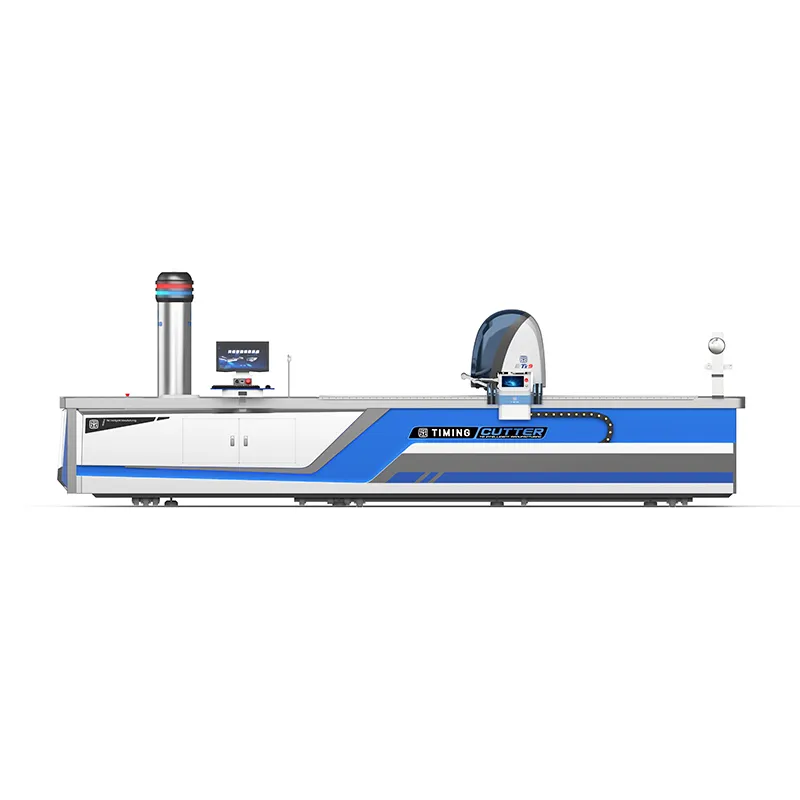
One of the most critical features for large-scale cutting is a robust, wide-format cutting table. Standard cutting tables often max out at 60 inches, which means you have to seam smaller pieces together or limit the size of your final output—both of which add time and cost. Our line of multi-ply cutting machines includes tables that span up to 180 inches, designed to hold entire large-format fabric rolls securely during the cutting process. This eliminates the need for manual repositioning, a major source of error when working with oversized cloth. Combined with intelligent knife control, these machines adjust blade pressure and speed in real time, which is essential for preventing frayed edges or uneven cuts on large, heavy fabric panels. You can learn more about this technology in our Fabric Cutting Machine with Intelligent Knife Control System, a model that’s specifically calibrated to maintain precision across the entire length of extra-large cloth pieces.
Another key consideration when working with large-scale cloth is multi-ply cutting capability. Many large operations need to cut 10 to 50 layers of fabric at once to meet production demands, and a machine that can handle thick stacks without compromising accuracy is a game-changer. Not all cutters are built for this: some struggle with uneven layer compression, leading to mismatched pattern pieces. Our multi-ply machines use automated layer feeding and tension control, which ensures each ply lies flat and evenly spaced across the cutting table—even when cutting large, wide pieces. For example, businesses that manufacture jeans often work with thick denim panels that need to be cut in large batches; our Jeans Fabric Cutting Machine is designed to handle the weight and stiffness of denim, delivering consistent cuts on large-scale panel pieces that align perfectly with production patterns.
Material compatibility is another factor that can make or break a large-scale cloth cutting solution. Large-scale pieces aren’t limited to a single fabric type: automotive interior components use heavy vinyl and fabric, home goods may include delicate lace or stretchy spandex, and workwear requires durable canvas. A one-size-fits-all cutter won’t work across these varied materials, especially for large pieces. Our Automated Fabric Cutting Machine is engineered with interchangeable cutting tools, from oscillating knives for thick canvas to drag knives for delicate fabrics, so it can adapt to whatever large-scale cloth you’re working with. For automotive businesses specifically, Car Fabric CNC Cutting Machine models are built to cut large interior panels, headliners, and seat covers with the precision required to fit seamlessly into vehicle designs—no more manual trimming or waste from ill-fitting large pieces.
CNC technology is non-negotiable for large-scale cloth cutting. Manual or semi-automated cutters rely on operators to follow patterns, which becomes increasingly difficult when working with pieces that are 10+ feet long. CNC (Computer Numerical Control) cutters use digitized patterns that are fed directly into the machine, ensuring every cut is identical across hundreds of large-scale pieces. This not only reduces error but also speeds up production: a CNC cutter can complete a large panel cut in minutes, compared to hours of manual labor. Our CNC Fabric Cutting Machine is equipped with a high-precision gantry system that moves smoothly across wide tables, so it maintains accuracy even at the far edges of extra-large cloth pieces. We’ve found that businesses using this model reduce material waste by up to 15% on large-scale cuts, a significant saving for operations that work with high-volume fabric.
Of course, no discussion of large-scale cloth cutters would be complete without addressing practical considerations for your operation. If you’re setting up a new cutting room, space is a big factor: wide-format machines take up more floor space, but they eliminate the need for separate work areas to handle large pieces. Many of our clients opt for modular designs that can be expanded as their production grows, so they don’t have to invest in a new machine when their output increases. Operator training is another point: while CNC machines are automated, having a trained staff to set up patterns, maintain the machine, and troubleshoot small issues is key to maximizing efficiency. That’s why we offer on-site training and ongoing support for all our machines, so your team can get up to speed quickly on handling large-scale cloth.
I’ve seen firsthand how investing in a suitable cloth cutter machine transforms operations that were struggling with large-scale cutting. A few years ago, we worked with a home textile manufacturer that was manually cutting large bedding fabric rolls; their process took 2 days per batch, had a 20% waste rate, and often resulted in mismatched panels that required rework. After installing our wide-format multi-ply CNC cutter, they cut their batch time to 4 hours, reduced waste to 5%, and their rework rate dropped to nearly zero. That’s the kind of impact the right large-scale cutter can have on your bottom line.
If you’re currently struggling with large-scale cloth cutting—whether it’s limited machine size, inconsistent cuts, or high labor costs—there’s no need to keep relying on outdated methods. Our team can help you assess your production needs, from the types of fabrics you work with to the size of your largest cloth pieces, and recommend the machine that fits your operation. We’ve designed our range of cloth cutter machines to meet the unique demands of large-scale work, combining precision, speed, and versatility to support your production goals.

If you’re ready to explore solutions for your large-scale cloth cutting needs, feel free to reach out to our team to discuss your requirements. We’re here to help you find the right machine, answer any questions, and support you through installation and beyond.
References:
- Textile Manufacturing Technology Association. (2022). Advancements in Automated Fabric Cutting for Large-Scale Production. Journal of Industrial Textiles, 51(3), 452-470.
- Automotive Interior Suppliers Association. (2023). Best Practices for Cutting Large Fabric Panels in Vehicle Upholstery. Industry Standards Report, 12(2), 18-25.
- Global Garment Manufacturers Association. (2021). Reducing Material Waste in Multi-Ply Fabric Cutting: A Case Study. Supply Chain and Operations Journal, 9(4), 112-128.


